Open-Book, Open-Notes Exams
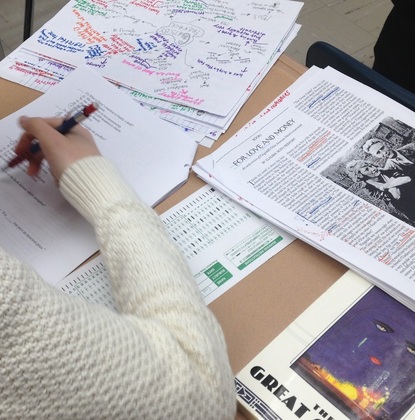
Several years ago we had a district-wide PD session with a guy named Alan November. He was a terrific keynote speaker: humorous and full of great ideas about teaching and technology. Throughout his lecture he emphasized the open-notes, open-book test. I loved what he said about this strategy -- it's more real-life, it focuses on developing important skills, and it de-emphasizes cramming the brain with useless crap -- so I incorporated it into my teaching practice.

Last week, I gave two open-notes, open-book tests. One was my Creative Writing course's quarterly exam. This covered every lesson, every handout, and every piece of writing we had studied the past eight weeks.
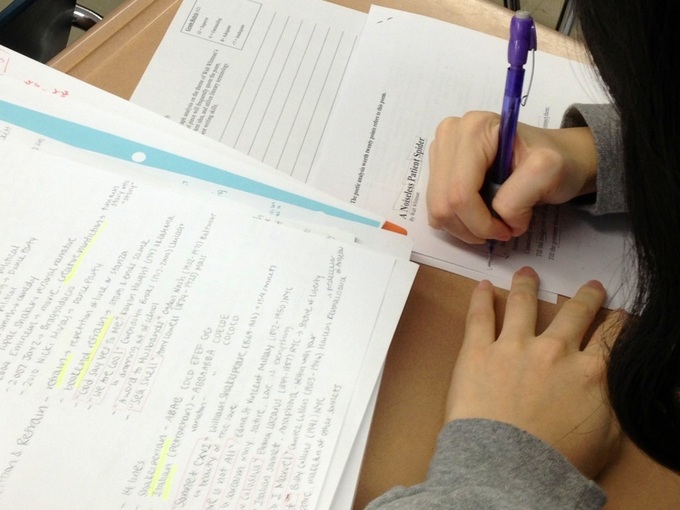
From Day One, the students knew this exam was coming and they knew it would be open notes. This strategy allowed me to emphasize NOTE-TAKING and ORGANIZATION skills all year-long.
From Day One, the students knew this exam was coming and they knew it would be open notes. This strategy allowed me to emphasize NOTE-TAKING and ORGANIZATION skills all year-long.
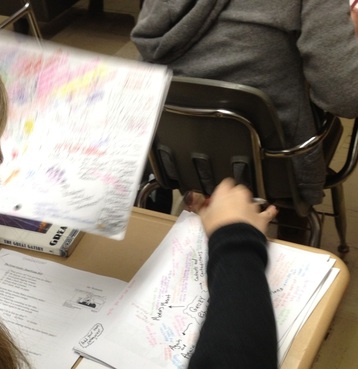
In my AP Language class, students used their notes, articles, mind maps, and even the book! for their final exam on The Great Gatsby.
They busted their butts to polish off their notes, collaborate with classmates, read over the book, and prepare in any way possible. The open-notes, open-book exam encourages all the best practices we want in students: preparation, organization, close reading, and careful note-taking.
They busted their butts to polish off their notes, collaborate with classmates, read over the book, and prepare in any way possible. The open-notes, open-book exam encourages all the best practices we want in students: preparation, organization, close reading, and careful note-taking.
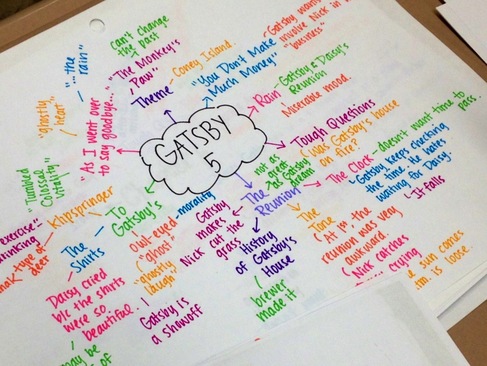
Plus, when students know there will be an open-notes test, they put more effort into taking notes and spend more time reading over their materials. They know it's not a test of memory: it's a test of their comprehension and long-term learning. Naturally, I favor the mind-maps-&-colored-markers techniques of teaching note-taking. These strategies are creative, mind-expanding, interesting, artistic, student-centered, and fun.
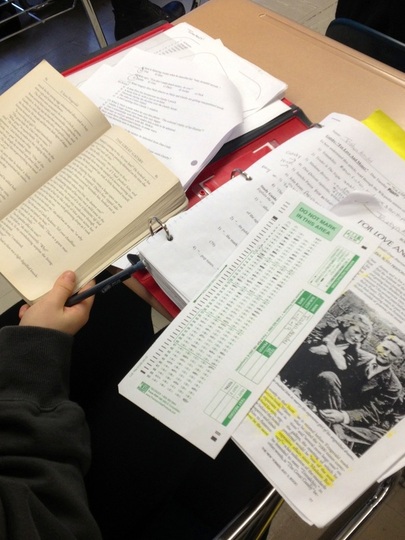
I emphasize note-taking every day in every class I teach. Direct Instructions sound like this: "Copy this down..." or "Write the answer..." or "Add this to your mind map..." These commands keep students engaged during a discussion by giving them a hands-on experience.
Teachers know that most students will not take notes unless they are directly told to do so. When students don't take notes in your class, you can't ignore the behavior! It's your duty and obligation to teach note-taking, to motivate your students to write and brainstorm, and to maximize their learning in your classroom.
Teachers know that most students will not take notes unless they are directly told to do so. When students don't take notes in your class, you can't ignore the behavior! It's your duty and obligation to teach note-taking, to motivate your students to write and brainstorm, and to maximize their learning in your classroom.
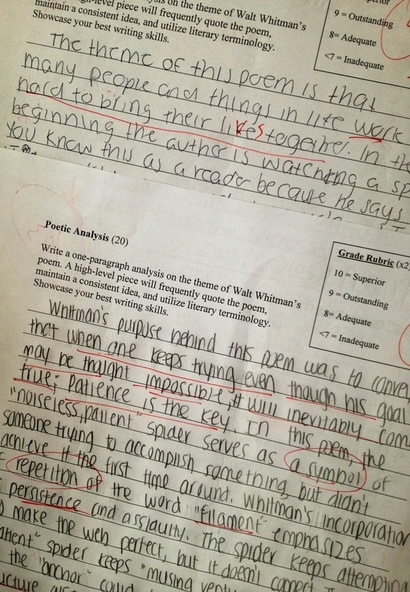
The key to teaching note-taking is to be patient and give students time to take notes. You need the with-it-ness to know who is following your directions and who isn't. You have to acknowledge whether each and every pupil is complying with your requests. It's not about embarrassing students or picking fights with your non-note-takers. You have to encourage them with positive reinforcement, teach them how to be good students, and reward them with tests that depend on those notes.
Ironically, of course, this method of testing is very different than standardized exams. Then again, my goals are to inspire young people, to teach reading and writing skills, to motivate long-term learning, and to get students even more invested in their educations. (Not really the goals of most $tandardized te$t$.)
If that's the type of teaching you want to do, try out some of the ideas I learned from Alan November: try the open-notes, open book test!
*********
If that's the type of teaching you want to do, try out some of the ideas I learned from Alan November: try the open-notes, open book test!
*********

Student response to my lessons about abstract art!
 RSS Feed